Fieldnotes / Impact
Why seaweed is the story of our time
Kelp grows a foot or two a day, needs nothing from us, and can feed, fuel, heal and de-carbonize. That is a film.
By Firestarter InteractiveSeptember 8, 20262 min read
Every documentary we have made started with a question that would not let go. For Kelp Movement the question is simple: what if one of the most powerful climate solutions on the planet is also a good business, and it is growing right off our coast?
A crop that asks for nothing
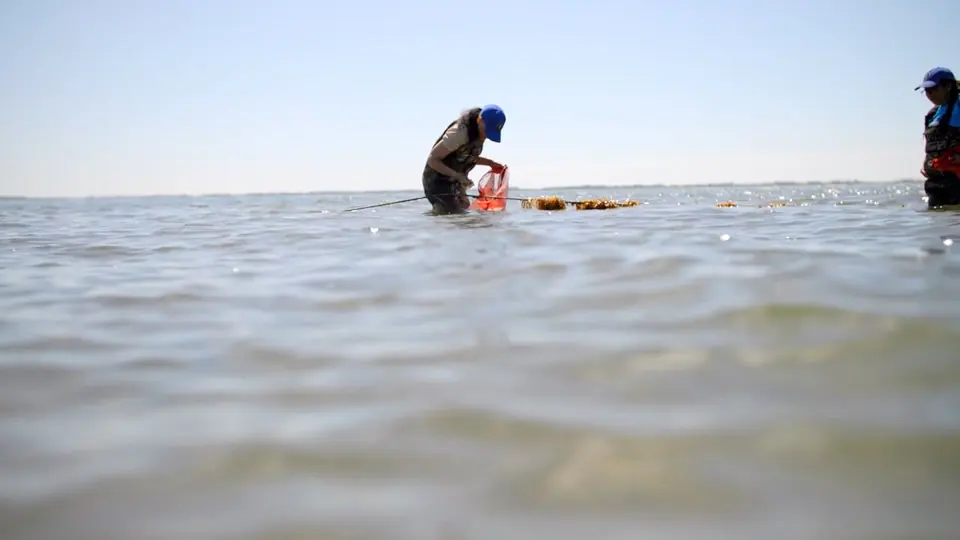
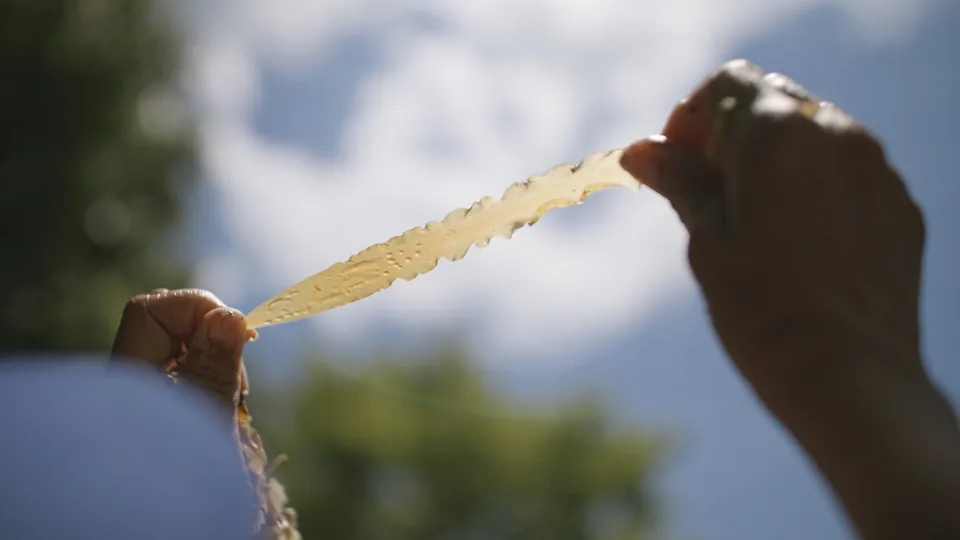
Kelp grows one to two feet a day. As it grows it absorbs up to twenty times more carbon than land-based plants, and it needs no fresh water, no fertilizer and no other inputs. On a regenerative ocean farm the seaweed is grown on lines alongside shellfish, and the farm cleans the water it sits in. Nothing about the model is theoretical. Farmers from Long Island’s Shinnecock Nation to Maine and Alaska are already doing it.
What seaweed already does
The reason the story reaches past the environmental audience is everything the crop becomes. Seaweed is the ocean’s superfood, low in calories and rich in vitamins A and K, iron, folate, calcium, magnesium, zinc and iodine, and high in the antioxidants that combat disease-causing free radicals. Macroalgae is one of the highest-potential third-generation biofuel sources, safe, sulfur-free and compostable, with 2016 global production valued at $11.6 billion and growing.
Fed to cattle, the red seaweed Asparagopsis taxiformis cuts methane emissions by as much as 82%, which matters because methane has 84 times the warming potential of CO₂ over twenty years. Seaweed-based polymers can replace petroleum plastics with something renewable, inexpensive and home-compostable. Seaweed-derived polysaccharides are already used in tissue engineering, drug delivery, oncology and wound care. And the same biologically active compounds are moving into cosmetics.
Blue economy pioneers are harnessing seaweed as a game-changing climate solution, and a good business, for a brighter, bluer future.
The people are the film
A list of uses is not a documentary. The film is the people betting their lives on this. In 2022 and early 2023 we filmed early-stage interviews across the Northeastern United States, in Burlington, Vermont, the Thimble Islands in Connecticut, and Brooklyn and Long Island in New York: Bren Smith of GreenWave, Casey Emmett of The Crop Project, Courtney B. Myers of Akua, Donna Collins-Smith of the Shinnecock Kelp Farmers, Kate Williams of 1% for the Planet and Willis Brown of Seagreen.
Two short films came out of that footage: a World Ocean Day film on regenerative ocean farming, released with 1% for the Planet, and a portrait of the Shinnecock Kelp Farmers. Both are on the Kelp Movement page, and both are the proof of concept for the feature.
Where it goes next
The feature follows the movement from Long Island and Maine to Alaska, California and Washington, and internationally to Norway, Australia, Tanzania, India and Chile, with the Faroe Islands, Scotland, the Netherlands, Belize and South Korea also on the map. The fundraising target is $1,700,000 for production and $335,000 for the release and impact campaign, a total of $2,035,000.
We are looking for funders, collaborators, connectors, distributors and educators. If the question will not let go of you either, tell us.
Published in Fieldnotes
Impact · September 8, 2026 · All posts